Esther House
- Date 1997-2000
- Address Quai Sainte-Barbe, 6 – 4020 Liège
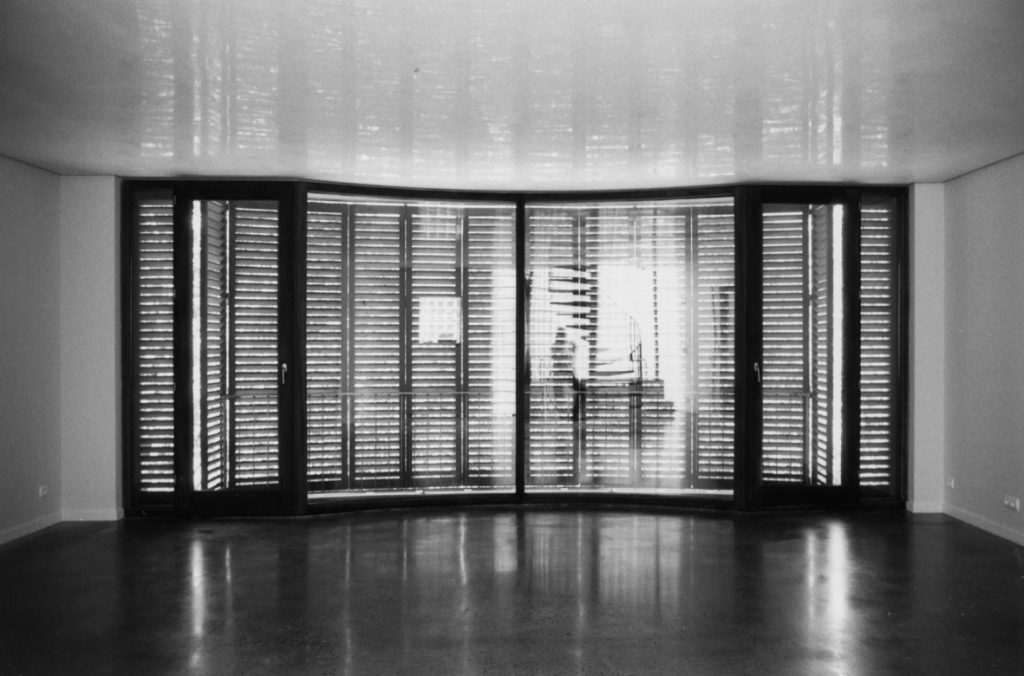
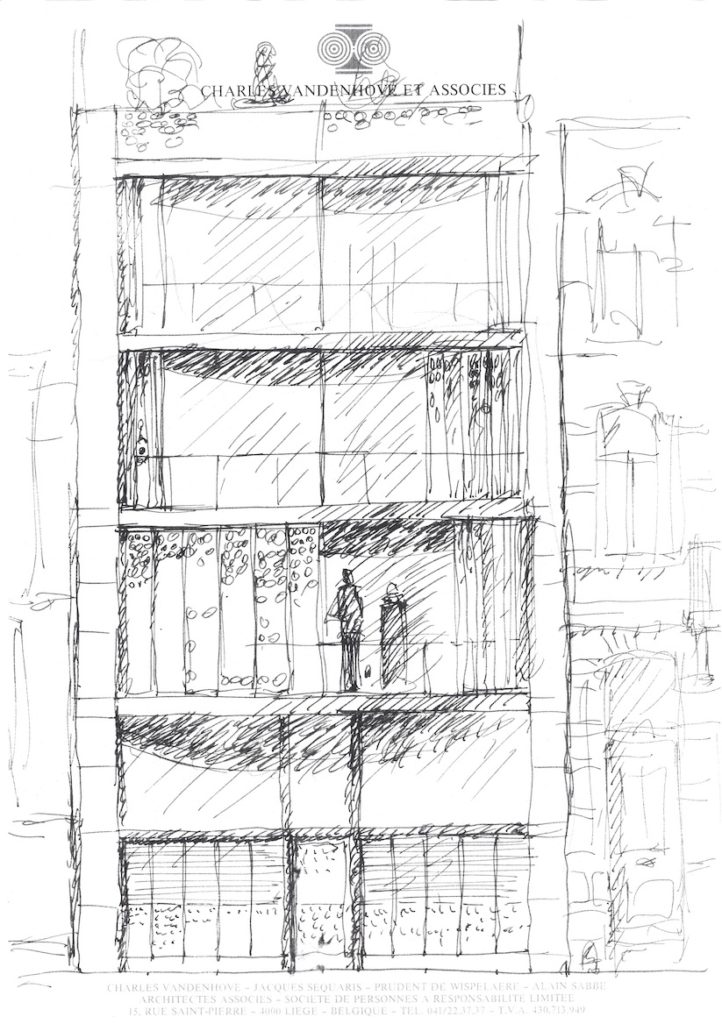
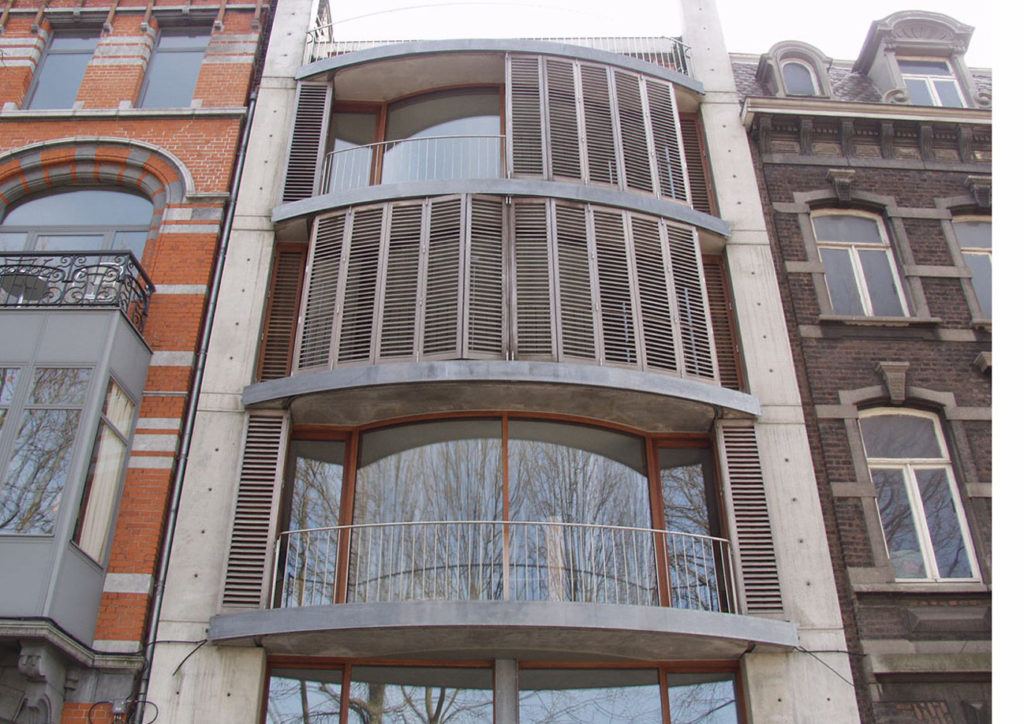
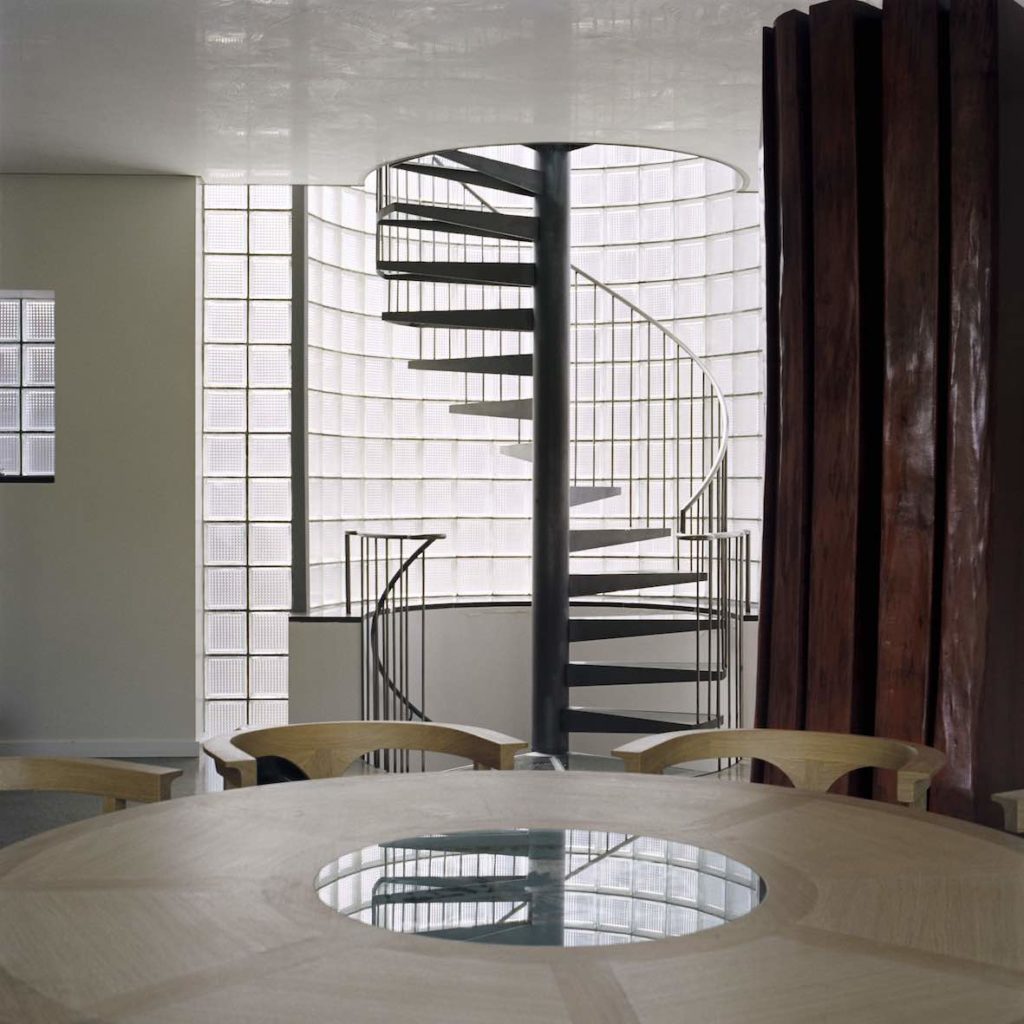
Whilst Charles Vandenhove was mainly active in the Netherlands during the 1980s and 1990s, certain projects allowed him to return occasionally ‘home’. The commission for a detached house on Quai Sainte-Barbe, a stone’s throw from the Balloir, initially represented a break with the prevailing trend along the banks of the Meuse, which were being taken over by property developers seeking profit through the construction of apartment blocks all along the quays. In the late 1990s, the Esther House project reflected a new vision for the Meuse quays, where the human scale and sustainable mobility were being brought back to the fore. Commissioned by a lawyer, the house was built on the site of two garages on a plot nearly 7 metres wide, which necessitated a vertical layout of the spaces across five storeys. Vandenhove proposed a fairly simple separation of private and professional spaces: the offices and secretarial area are situated from the ground floor to the second floor, the large bedroom on the 3rd floor, and the kitchen and living room on the top two floors. Opening out widely onto the Meuse, the house features arched balconies and a large terrace on the 5th floor. Vertical circulation is provided by a lift and a spiral staircase illuminated by a glass-brick feature. Dominated by generous arched and glazed windows, the street-facing façade is characterised by a design of great clarity, where the materials—concrete, glass and wood—interact harmoniously.
The Esther House project occupies an important place in Vandenhove’s body of work and, through a whole series of fundamental elements and details, foreshadows later projects such as the Maison Céramique in Maastricht and the Terrasses de Saint-Gilles in Liège.
- Volumetry 2 archive boxes
- Bibliography
VERSCHAFFEL, Bart, Charles Vandenhove, architecture / architectuur 1954–2014, Tielt, Lannoo Publishers, 2014, pp. 42–43 and 208–215.
- AUTHOR AND DATE OF THE ENTRY Sébastien Charlier, 2022
-
-
OLYMPUS DIGITAL CAMERA -
-

-