Koninklijke Schouwburg
- Date 1990-1999
- Address Korte Voorhout, 2 – 2511 EK Den Haag (Netherlands)
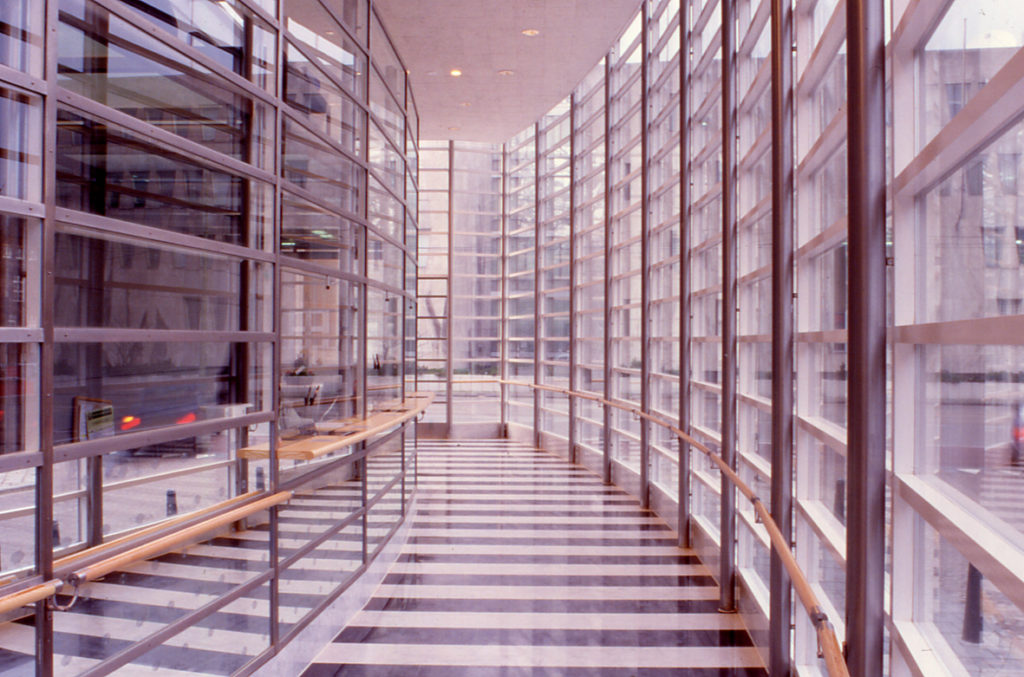
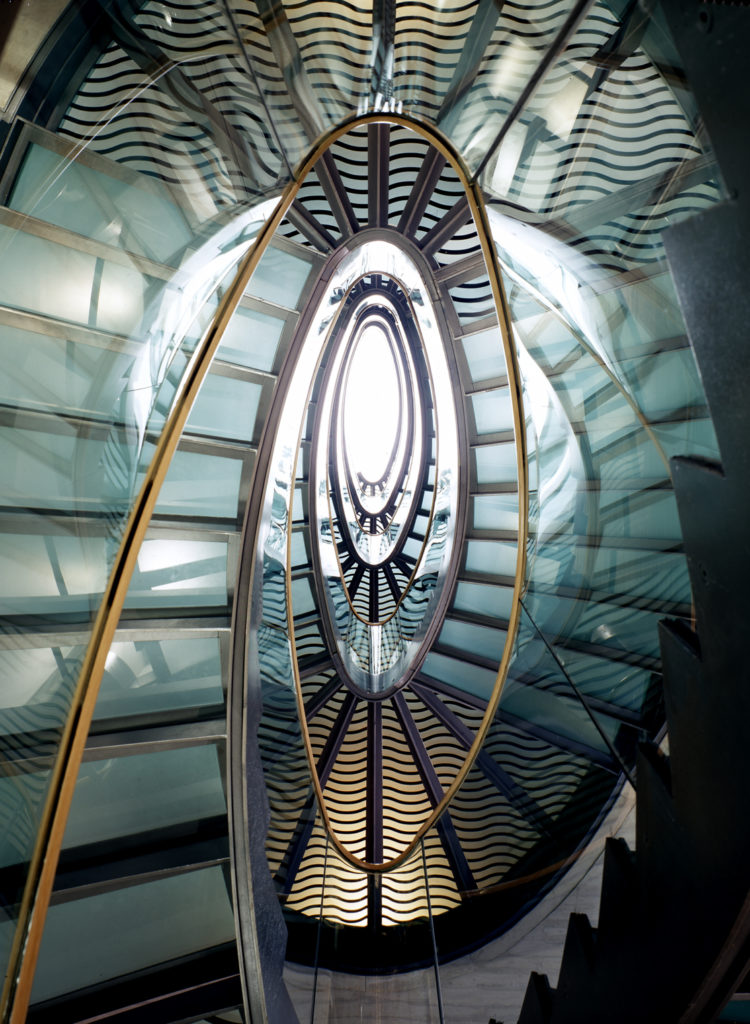
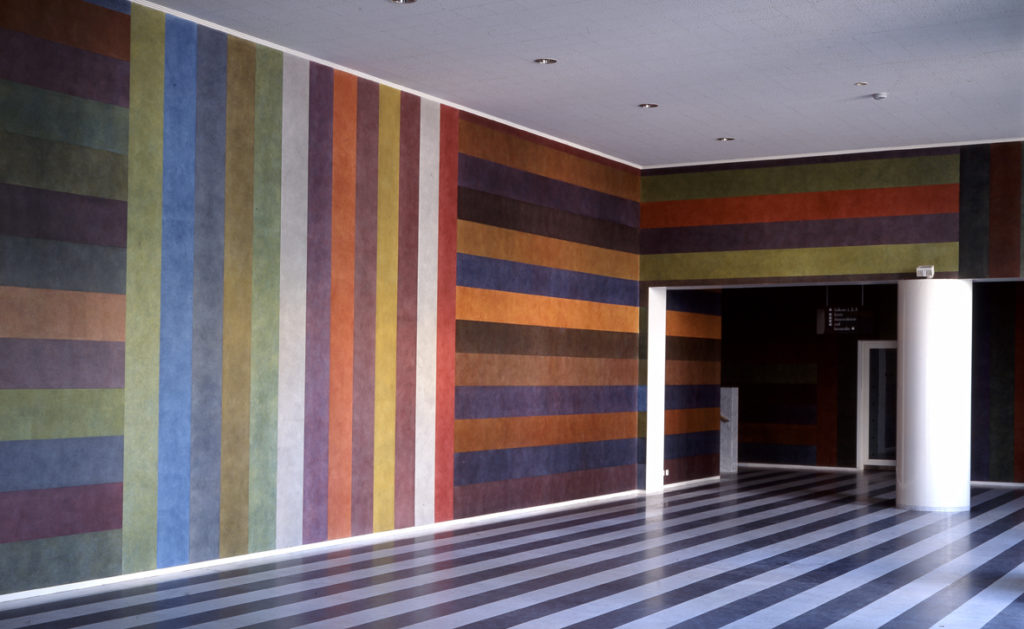
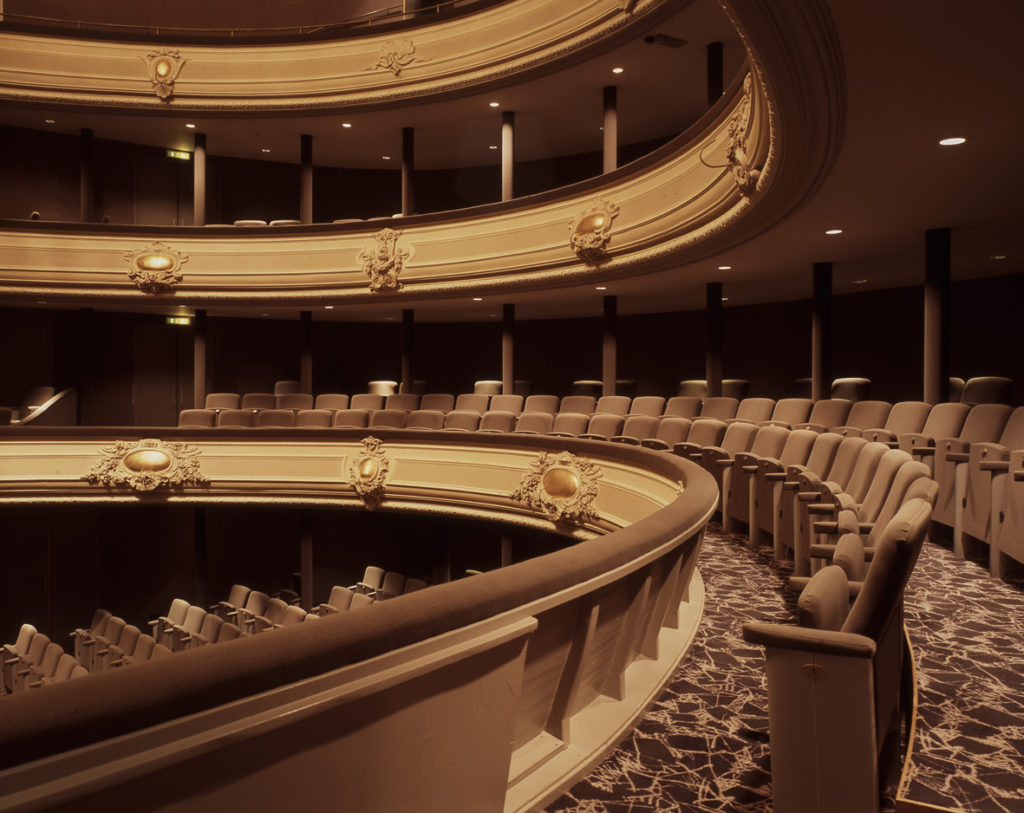
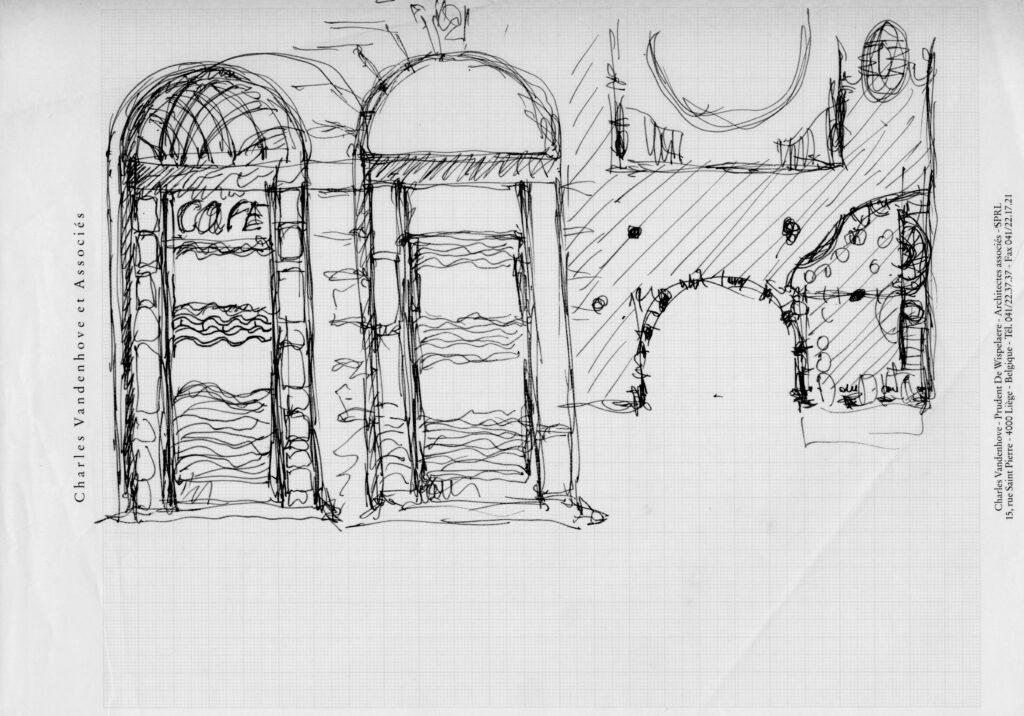
In the 1990s, Vandenhove had an extensive network in the Netherlands, particularly in The Hague. The expertise he had gained whilst designing the Théâtre des Abbesses and carrying out his ‘artistic’ intervention at the Théâtre de la Monnaie led to him being commissioned to renovate the Royal Theatre in The Hague, an elegant, classically inspired building dating back to the 18th century. Vandenhove’s project was carried out in two phases. The first, in 1991, involved the addition of a small building to the north-east wing. Entirely glazed, it was designed to house the new box office and a bookshop. However, the most significant intervention took place at the rear, with the complete renovation of the theatre and the demolition and reconstruction of the structure housing the stage (architects HH. Van Zeggeren, 1929). Designed in 1994, the five-storey building was intended to house offices, dressing rooms and technical facilities, but above all to extend the raised stage pit. The most spectacular change concerns the vertical circulation routes. On either side of the auditorium, glazed staircases comprising sandblasted glass steps provide access to the various levels. As in Brussels, Vandenhove once again called upon Sol LeWitt to bring his vision to the interior spaces. The American artist worked on all the walls of the foyer, creating large panels composed of horizontal or vertical bands in various colours. Jean-Pierre Pincemin was also commissioned to design the carpet patterns in the main auditorium and the sandblasted motifs on the glass balustrades in the offices.
Guest artists: Sol LeWitt, Jean-Pierre Pincemin.
- Description of the collection
Plans, administration, specifications, surveys, legal files, documentation…
- Volumetry 41 archive boxes, 1 photographic file
- Bibliography
VERSCHAFFEL, Bart, Charles Vandenhove, architecture / architectuur 1954-2014, Tielt, Lannoo Publishers, 2014, p. 41.
- AUTHOR AND DATE OF THE ENTRY Sébastien Charlier, 2022